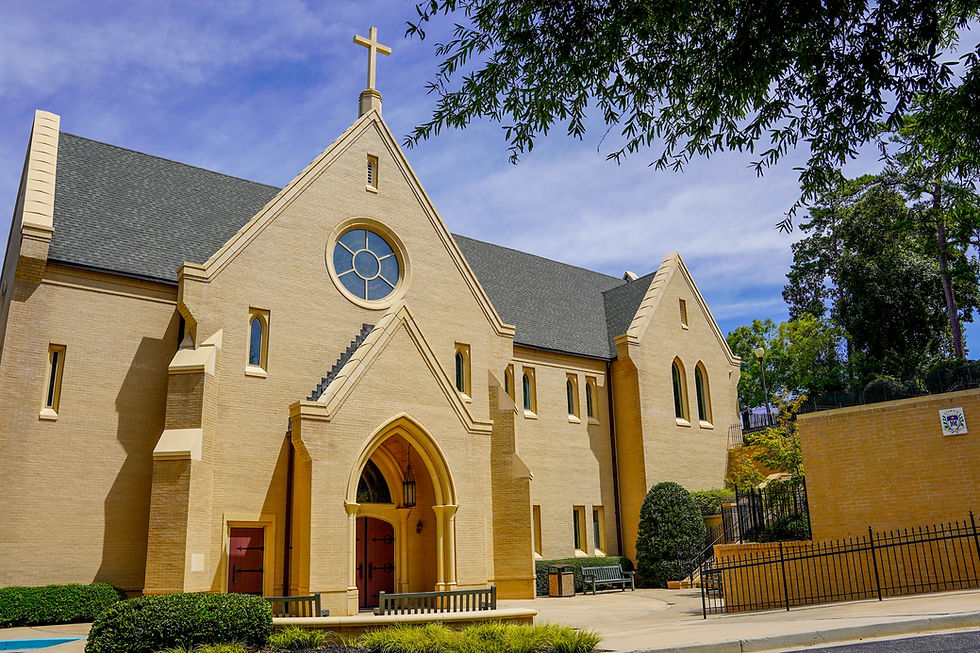
Wondering Why the Statues in the Church are Veiled?

If you were/are at OLA this weekend you'll notice that the crosses, statues, and holy images (except Stations of the Cross and stained glass windows) are covered with purple cloth. (Unfortunately, these images came out looking blue!)
The final period of immediate preparation for celebrating the Easter mysteries is traditionally called Passiontide. During these last two weeks of Lent, the prayers, antiphons, and liturgy readings speak more explicitly of Our Lord’s Passion and Death. The Church invites her faithful to meditate on these mysteries, which we prepare to commemorate in the Sacred Paschal Triduum, the single liturgical celebration beginning on Holy Thursday evening and concluding with the Easter Vigil.
One of the customs associated with Passiontide is the veiling of statues nd crucifixes during this period. The current edition of the Roman Missal says on the Fifth Sunday of Lent: “In the Dioceses of the United States, the practice of covering crosses and images throughout the church from this Sunday may be observed. Crosses remain covered until the end of the Celebration of the Lord’s Passion on Good Friday, but images remain covered until the beginning of the Easter Vigil” (The Roman Missal, third edition, 2011).
The veiling of sacred images helps create a sense of simplicity and longing as we prepare to commemorate the Passion, death, and Resurrection of the Lord. By temporarily covering these familiar images, the Church invites the faithful to focus more deeply on Christ’s suffering and sacrifice. This tradition helps us enter more deeply into the mystery of these sacred days and heightens the joy of Easter when the church’s images are once again visible.